Bangalore city is an important commercial city in South India and known as the silicon valley of India. The city is generating 5000 tons of waste daily.This waste was collected in a mixed format and dumped in nearby villages. Because of severe pollution and health hazards in the dump areas the local villagers protested and with the intervention of court the dumping was banned. Therefore the city administrators had to find ways to address the huge waste. The city was forced to regulate the waste management.
The Bangalore city corporation classified the large apartments as bulk generators of waste and mandated them to segregate and manage waste by themselves. In order to initiate waste segregation, the Bangalore city corporation introduced “2 BINS AND 1 BAG” model in 2013.
This case highlights the ideation, planning and implementation of a decentralized waste management model in Purva Fairmont apartment at Bangalore which is comprised of 324 houses.
APPROACH
The residents of Purva Fairmont formed a committee and educated the residents about the needs and ways of segregation. Further they explored solutions to manage different categories of waste segregated such as Wet/Organic waste, Dry waste, Reject waste, e-waste etc. Out of these, wet waste management seemed to be the most challenging. After collaborating with vendors and apartment volunteers, the committee studied the pros and cons of existing composting machines and techniques. They concluded with the following requirements for an effective wet waste management method:
A sustainable composting model well suited for apartment complex.
Affordability of the composting setup.
Ease of composting for the workers.
The compost generated should be of good quality.
Thereafter in 2013, the committee representatives met Mr. Vasuki from SudhLabh. They also visited SudhLabh’s first trial run composting digester which was managed by a community of 80 odd apartments mostly of senior citizens.The major advantages of this model were:
Simple structure and set up.
Ease of composting and less effort by workers.
Easy Maintenance,Lesser construction and machine cost compared to existing facilities.
Capacity building and training was simpler.
Electricity independent and there is no complex machinery required.
Easy to correct the mistakes and change the process according to the conditions.
Lesser operational cost compared to existing machines.
Minimal Smell and worms.
Minimum amount of the carbon source against the feedstock.
We can recycle the compost generated by mixing it with fresh composting medium.
Above all, this process generates good quality compost.
This inspired the committee to set up Shudhlab’s digester in their apartment.
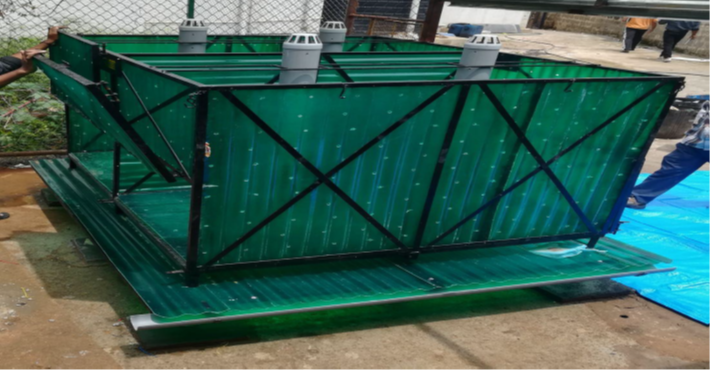
SUDHLABH’s composting digester
The composting set up comprises of a ventilated digester and composting medium, provided by Sudhlabh. This composting medium is a patent pending specially formulated coco peat based product developed and supplied by Dr.Joshy V Cherian.
The wet waste and composting medium in dry compacted form should be taken in a ratio of 1:1/8. Further the medium is hydrated, mixed with wet waste and deposited in the ventilated digester (dimensions provided at the end of the document). The final compost generated can be recycled by mixing it with fresh composting medium in 1:1 ratio.
CHALLENGES
Criteria for setting up the digester:
It should be spread across the complex.
It should have good air circulation so that the smell can be wafted away in the wind.
Good sunlight for better moisture management.
At least 10 feet away from home and 3 feet away from the compound wall so that the residents don’t feel that they are near a composting area.
Should have good drainage to clean the area thoroughly every day.
Strong concrete base so that 3000 kg unit doesn’t sink in.
Good roof to avoid rain water.
Space to remove compost.
Work around space to clean.
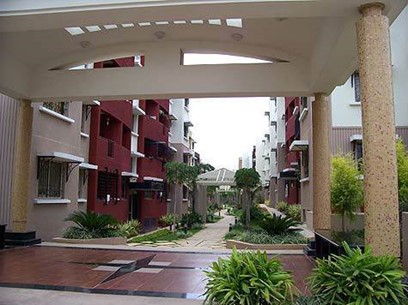
Should not affect aesthetic value of the building.
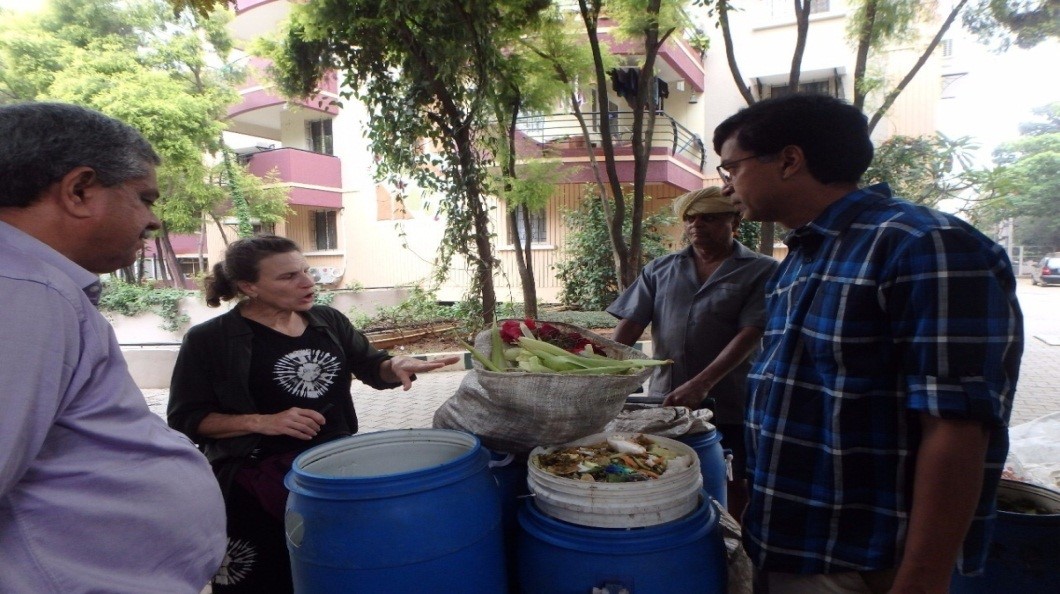
Wet waste collected from individual houses.
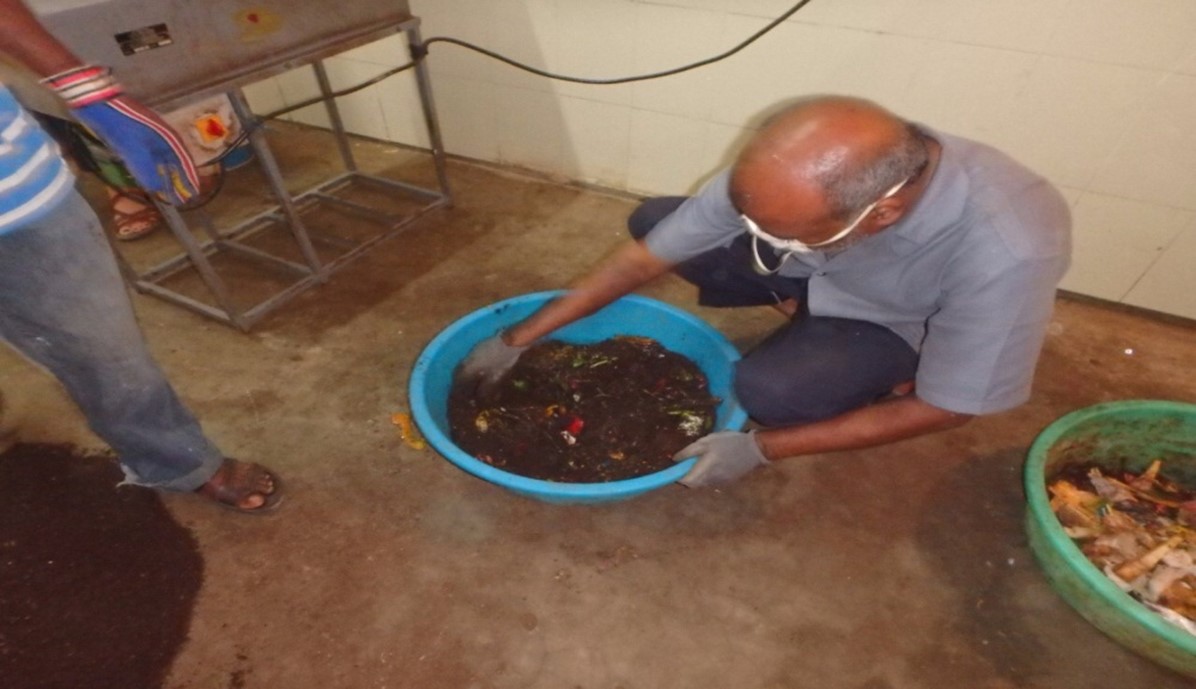
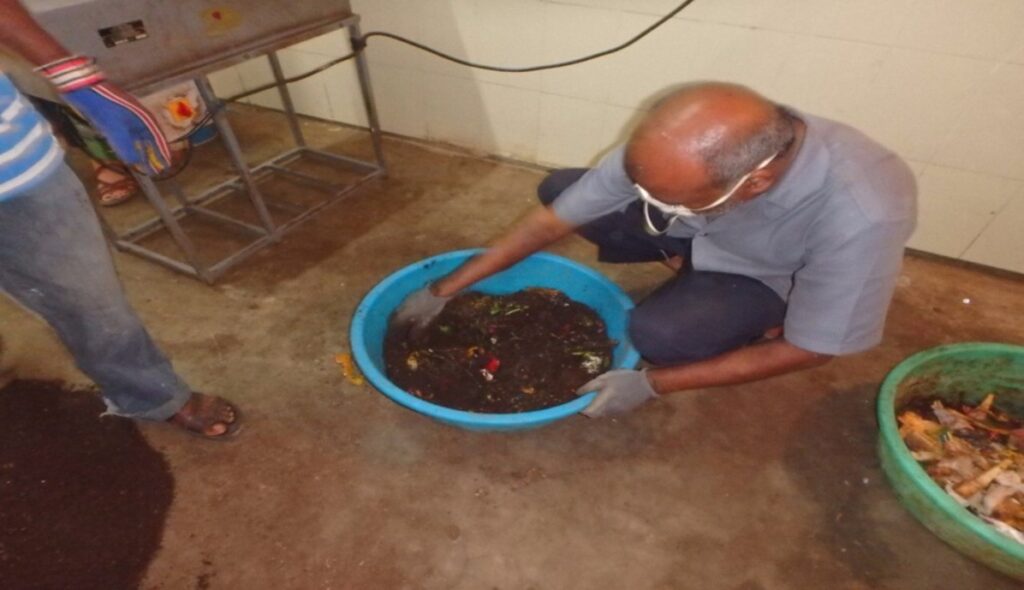
Waste mixing room.
Waste Composting Container
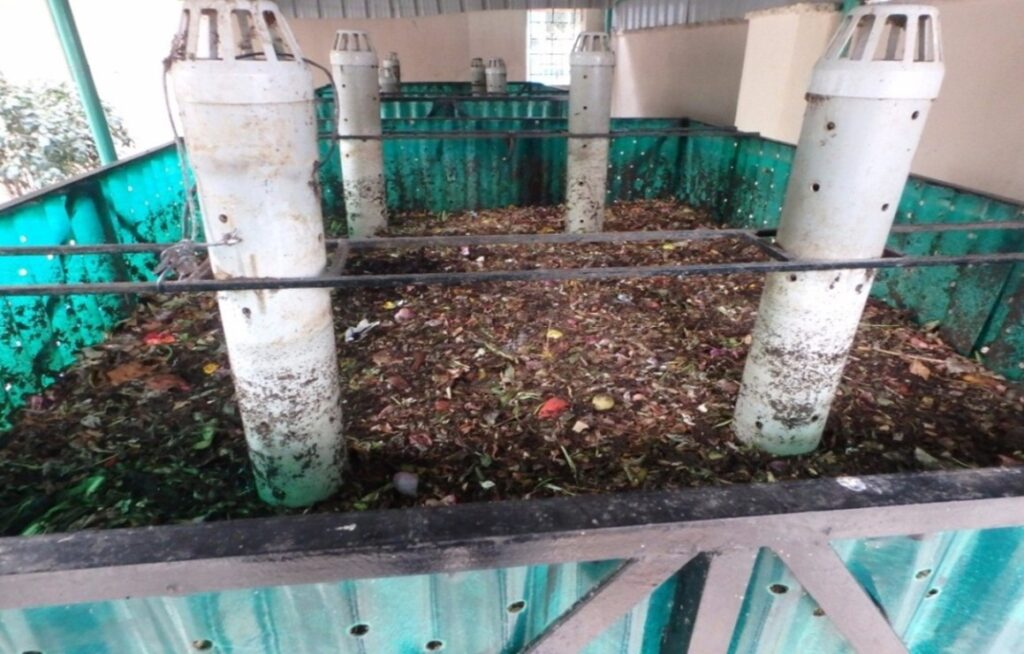
FRP Digester with waste and composting media.
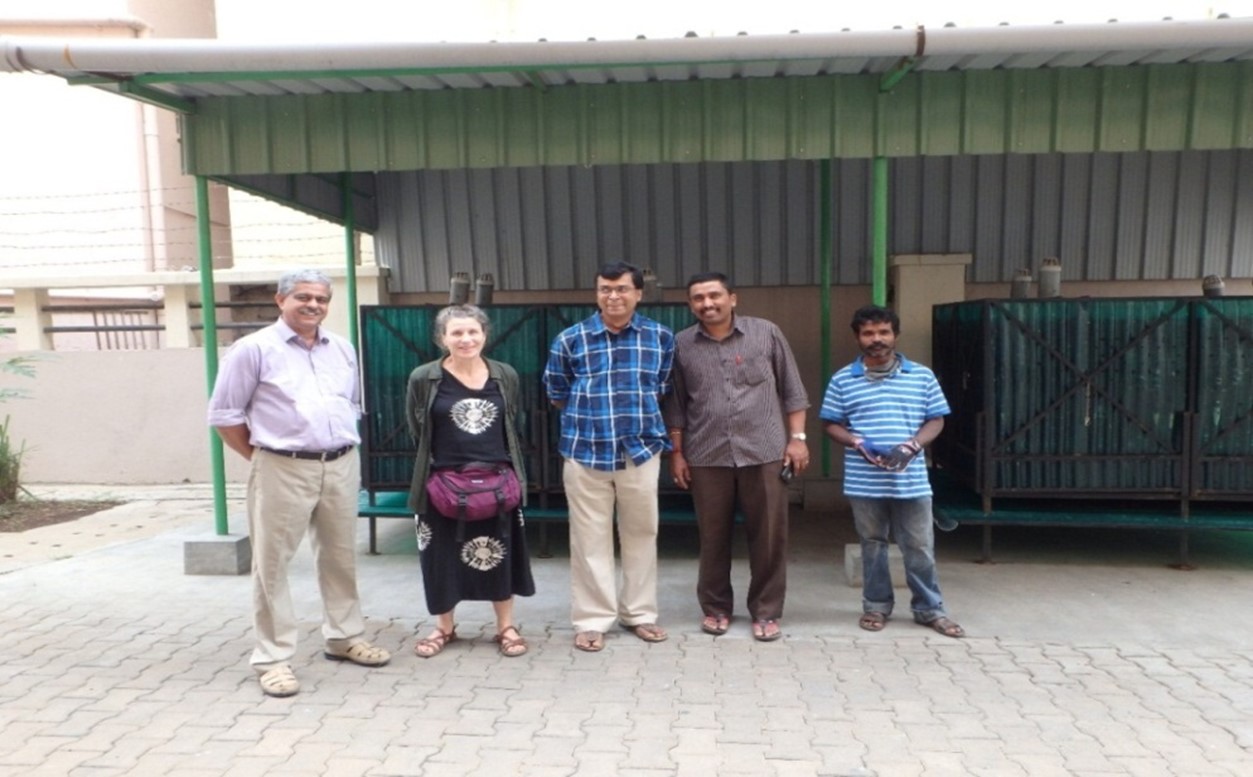
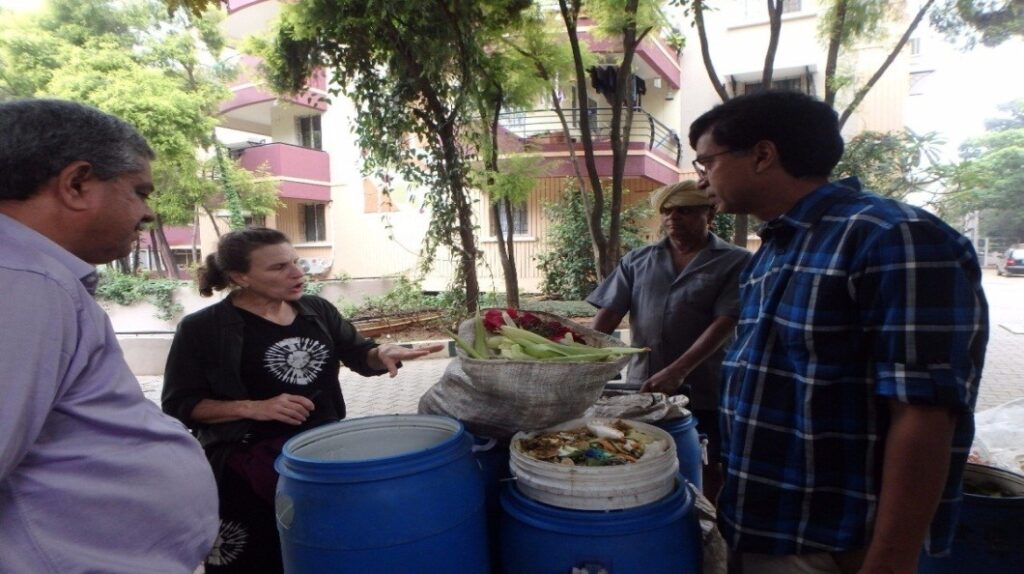
The apartment waste management initiative being visited by Jean Bonhotal, Cornell Waste Management Institute